MTR
Meters
Name the unit. Set the rate. Print the rounding rule on every stub so the customer does not have to guess.
Book 00
ScripBook 00 · Period open
Stub 0001
Scrip · Usage invoicing
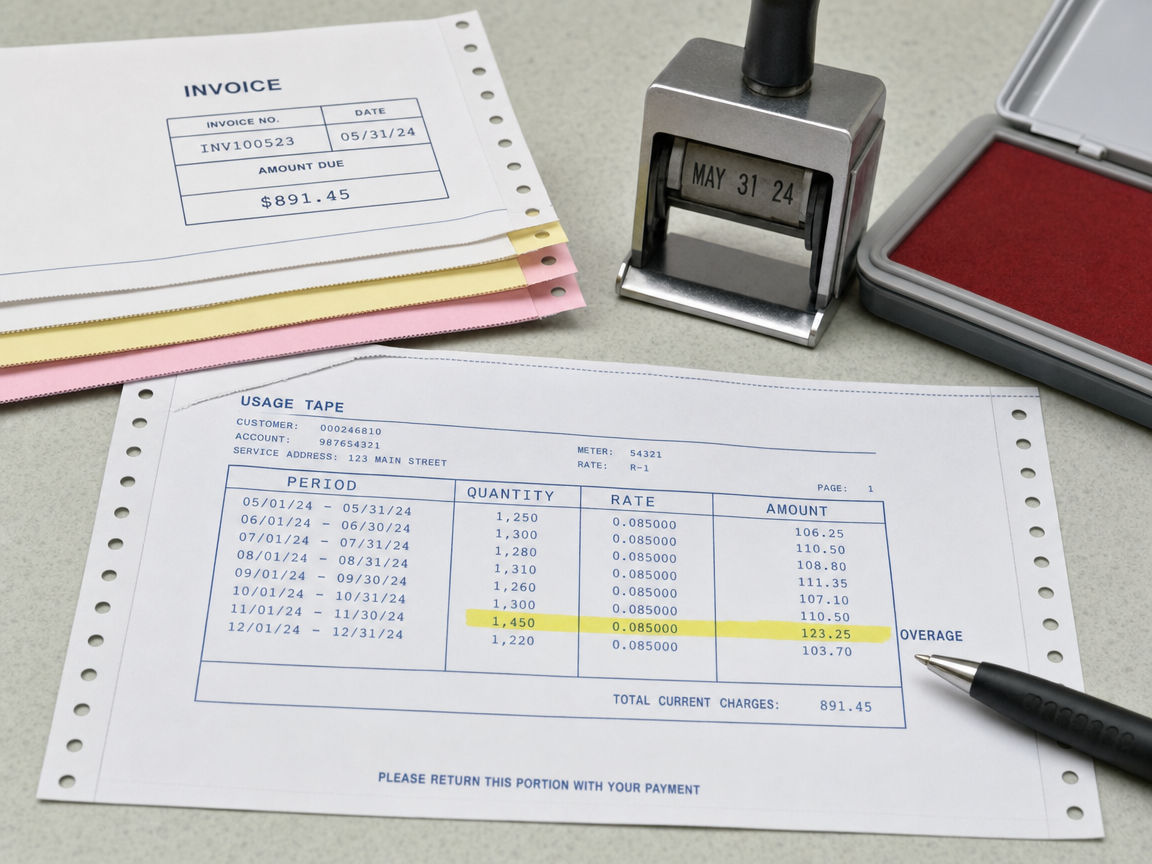
Scrip turns seats, API calls, and metered work into invoices a finance team can reconcile. You set the rate. The book prints the period. Overage does not hide in a footnote.
Not a processor · Not a wallet
Meters
Seats, calls, and units. Each with a rate you can point to.
Stubs
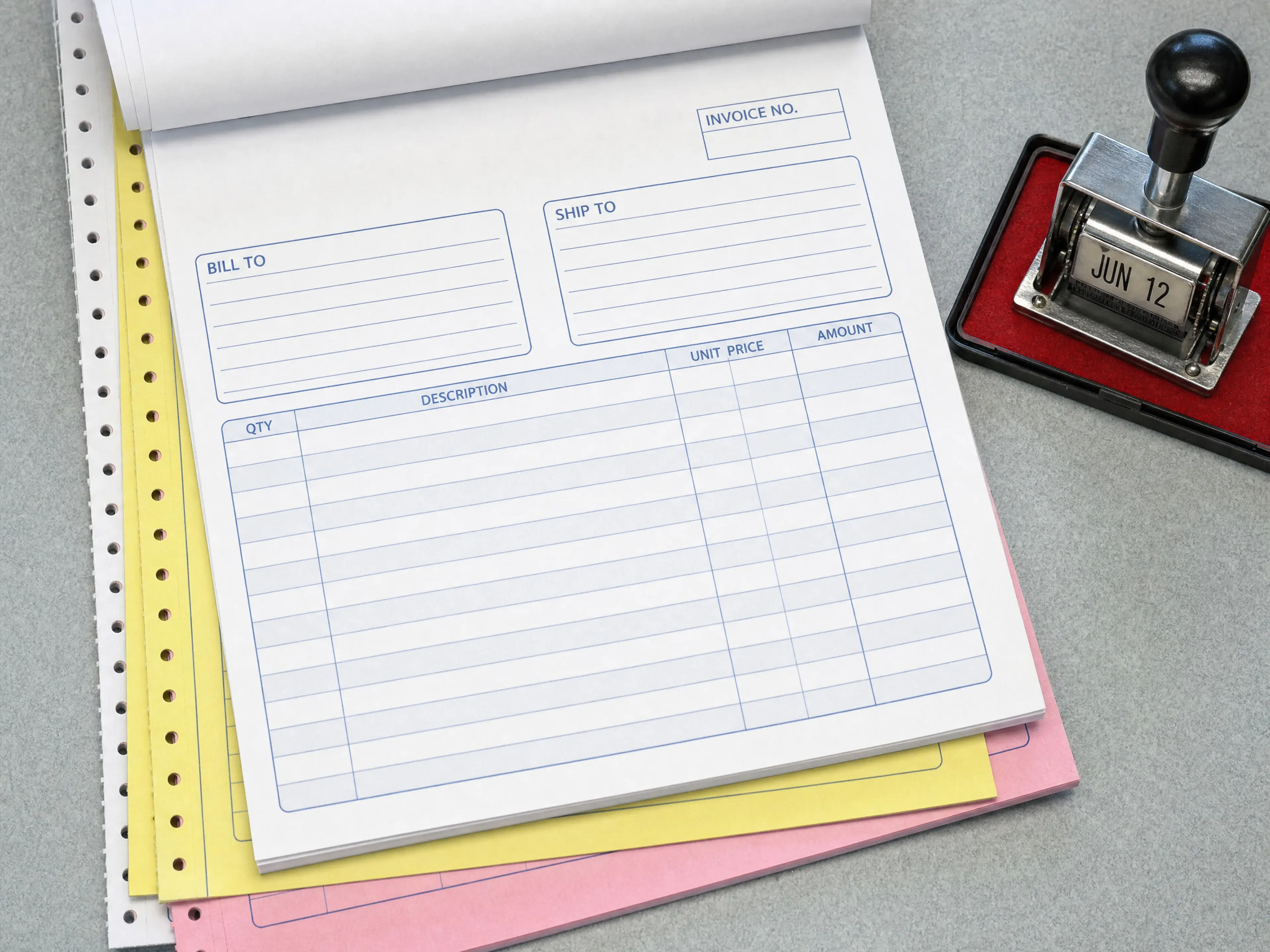
One line on the invoice. Quantity, rate, amount. Nothing collapsed.
Feeds
CSV, API, or warehouse. You already have the usage.
What you keep
Scrip does not invent a price. You write the rate card. The book applies it to the period you close. If the feed is late, the book stays open.
One customer, one book. Rates live on the book. The period prints from the book. Shared inboxes do not issue invoices.
Seats, API calls, gigabytes, jobs. Each meter has a unit, a rate, and a rounding rule that prints on the stub.
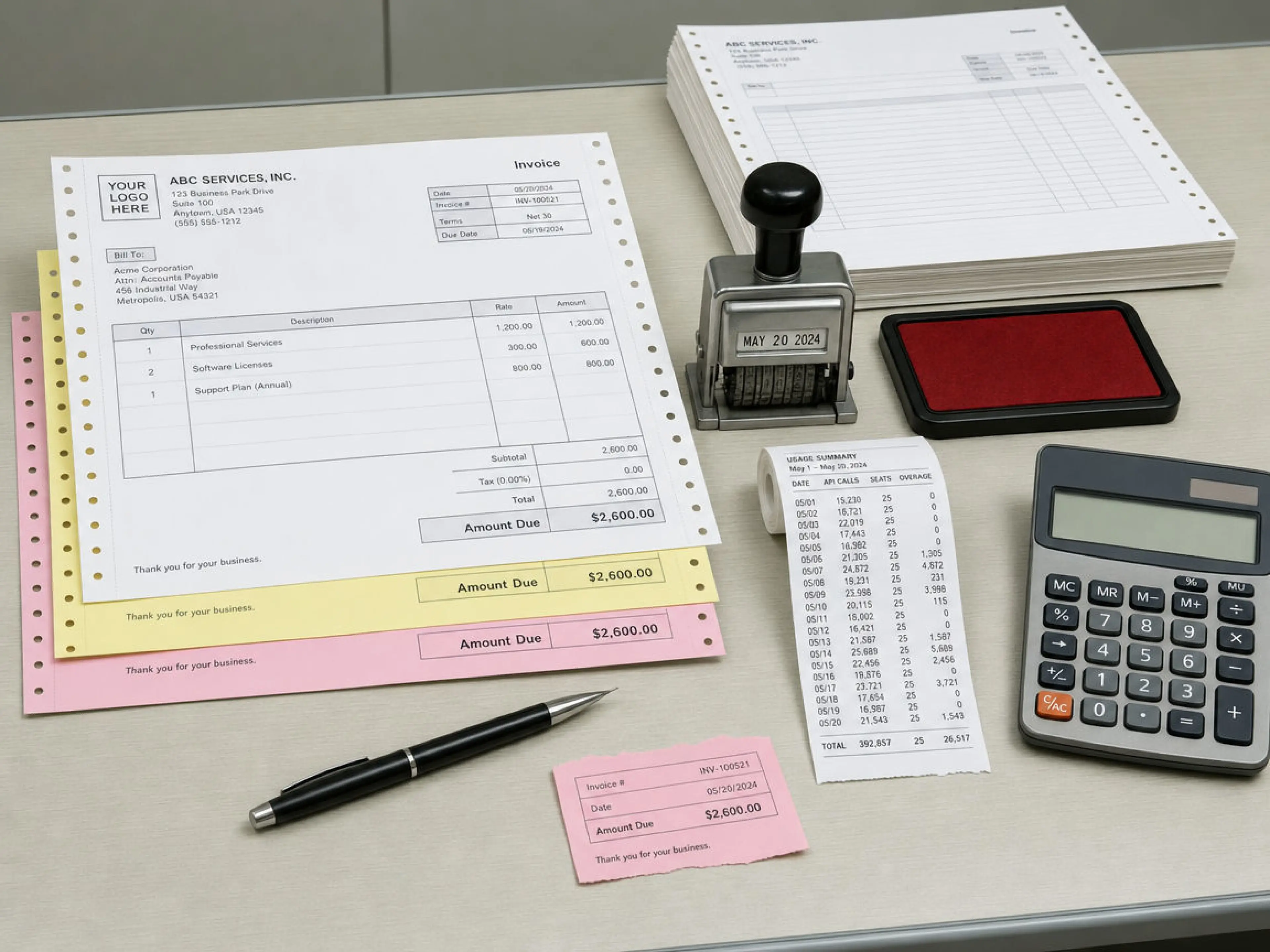
Quantity × rate = amount. If you need a rollup, it is a second stub with its own code. Scrip will not collapse lines to look tidy.
How a period prints
MTR
Name the unit. Set the rate. Print the rounding rule on every stub so the customer does not have to guess.
STB
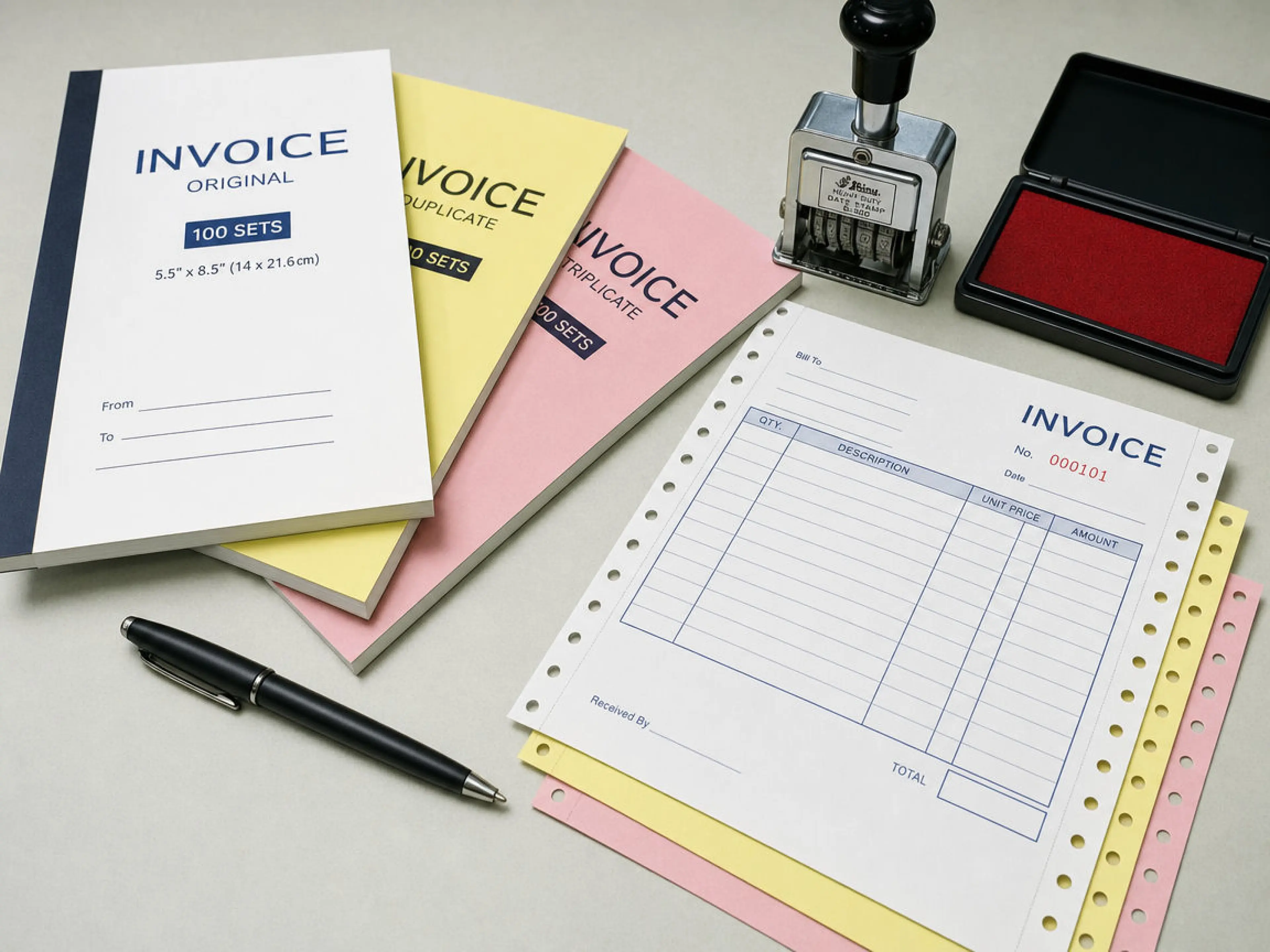
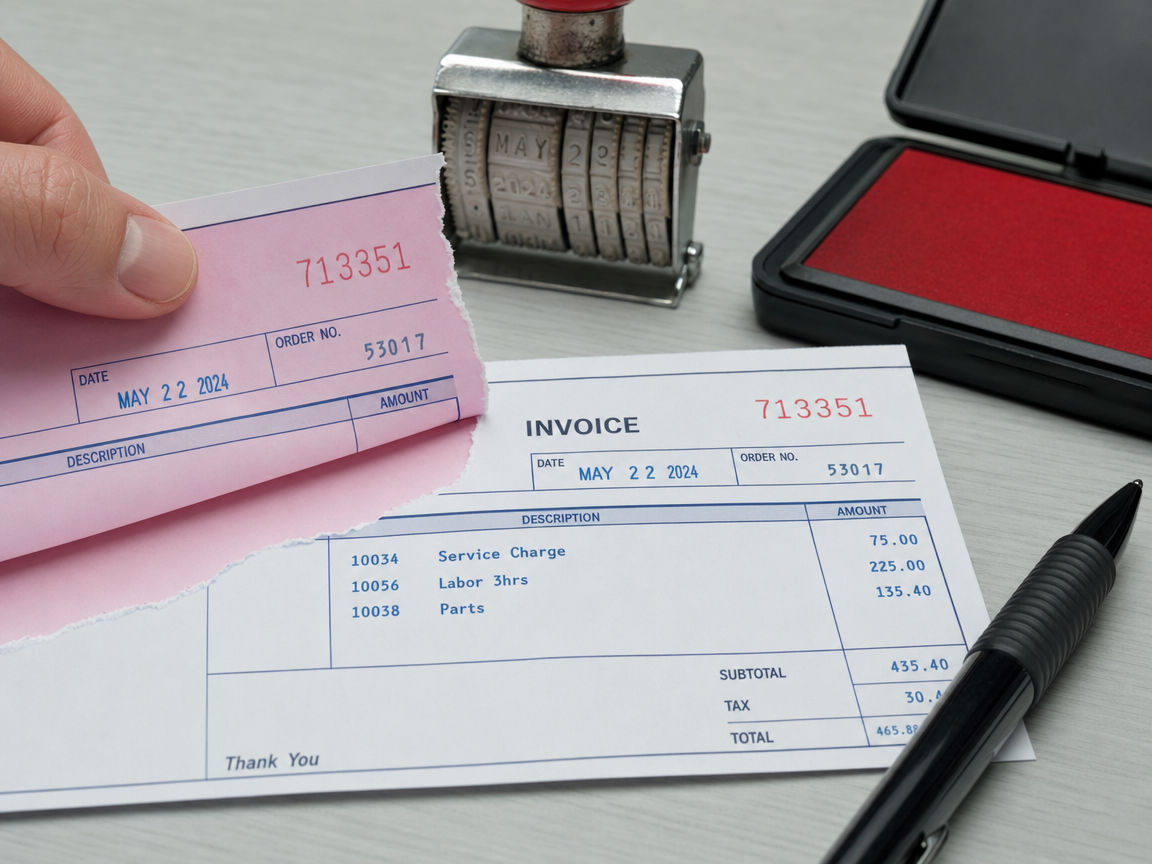
Each stub is a tear-off line: quantity, rate, amount, tax. You can void a stub. You cannot hide one.
FED
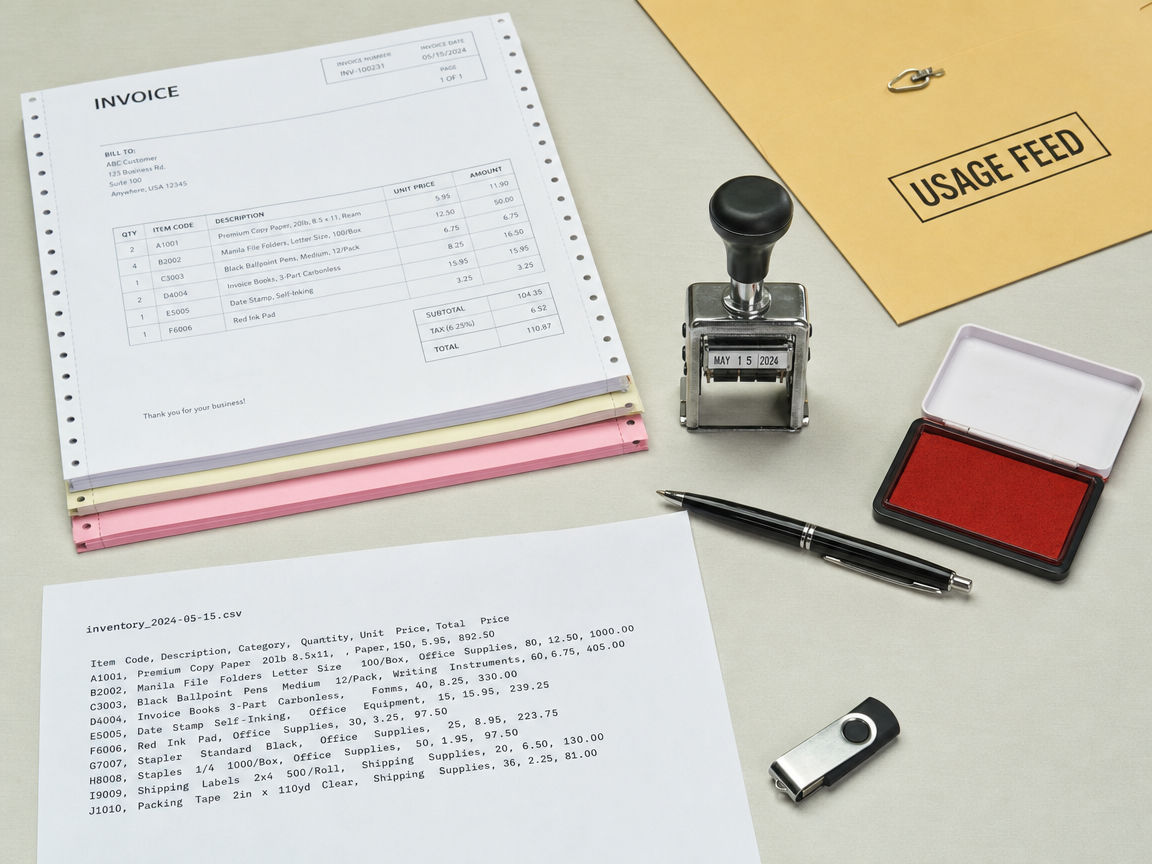
Push usage from the warehouse, the API, or a CSV your customer already files. Scrip does not scrape a dashboard.
What Scrip refuses
Scrip prints the invoice. Your processor, your bank, or your net-30 desk collects. We are not a wallet.
If a meter rounds, the rule prints on the stub. Silent banker's rounding is a defect, not a feature.
Overage is a stub with its own code. It is not a footnote, a tooltip, or a 'details in portal' link.
A book has a name on it. Shared inboxes can draft. They cannot close a period.
Rate card
Prices are specimens for this template. Replace them. The furniture does not charge a card.
Stub
$0/ mo
One book, one meter, paper statements.
Book
$79/ mo
For a product that already meters usage.
House
$240/ mo
Finance ops across more than one product.
Statements
Questions
No. Scrip prints the invoice. You send it through the processor or the net-30 desk you already run.
Close the period